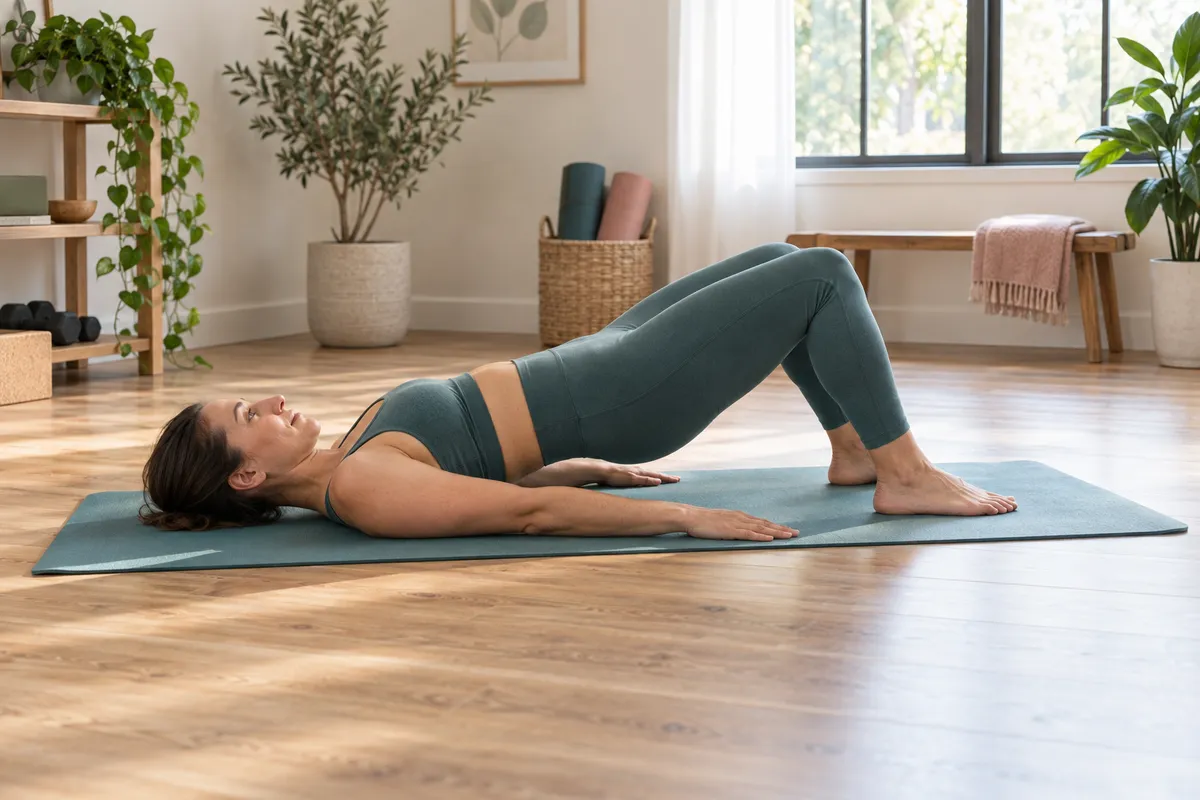
Ask a Pilates instructor to pick a single move for the rest of her life and you might expect something dramatic: a hundred-count burner, a leg-in-the-air flourish, something with a name that sounds like a ballet term. Nicole Hernandez went another way. Per Fitandwell, her answer is the pelvic curl, the foundational move that boosts spinal mobility and core strength.
It's a plot twist worth taking seriously, especially if your workout wardrobe is fancier than your mat routine.
Why the Pelvic Curl, Specifically
According to Fitandwell's reporting, Hernandez argues the move is simple but powerful because it combines spinal mobility with glute, hamstring, and core strength. That's the whole pitch: one movement, several jobs.
It's hard not to see why that lands right now. Low-impact, accessible strength and mobility workouts are popular as people look for sustainable routines they can do at home, and the appeal of "minimum effective dose" exercise, simple moves that deliver multiple benefits, keeps growing. The pelvic curl is basically the capsule wardrobe piece of Pilates: not flashy, wears with everything, and you'll still reach for it years later.
The Capsule-Wardrobe Theory of Fitness
Here's my take, and it's visibly mine: fitness has a trend problem that looks a lot like fashion's. Every season brings a new must-have routine, a new piece of equipment, a new acronym. Hernandez's answer is the opposite of that churn. When asked what she'd keep forever, she didn't pick the novelty. She picked the basic.
That's the same logic behind a perfectly cut white shirt or a great pair of black trousers. The fundamentals earn their place because they work hard and don't need a styling team.
What the Move Is Doing
Based on what Fitandwell reports, the pelvic curl is a three-in-one:
- Spinal mobility: the movement asks your spine to articulate rather than stay stiff.
- Glute and hamstring strength: the back of your body does real work.
- Core strength: your midsection is part of the action, not a bystander.
That's the claim from the instructor, and it's a tidy one. The source piece highlights these benefits rather than a long list of extras, so I'll keep to them.
How to Make It Part of Your Routine
The appeal for home practice is obvious: there's no complicated setup behind the idea. A move that's foundational is, by definition, one you can build on. If you're new to Pilates, it's a sensible place to start paying attention to how your spine moves. If you're experienced, Hernandez's pick is a reminder that basics don't expire.
A few things to keep in mind as you try it, offered as general good sense rather than anything attributed to Hernandez:
- Move slowly. The point is control, not speed.
- Pay attention to how it feels in your back, glutes, and hamstrings.
- Treat it as a regular habit rather than a one-off challenge.
If you have a back issue or any pain, check with a professional before adding new exercises.
The Takeaway
There's something quietly refreshing about a pro choosing the humble option when the whole fitness world is shouting about the next big thing. Hernandez's lifelong pick isn't the most photogenic move on the mat. It's just the one that does the most with the least, and that's the kind of fashion advice, and fitness advice, that never goes out of season.