TL;DR
Forget the six-pack myths! These three beginner-friendly Pilates exercises will help you activate your deep core for improved stability and posture—all without any equipment.
Understanding the Deep Core vs. Aesthetics
We live in a culture obsessed with visible abs, but let’s set the record straight: just because you can see your six-pack doesn’t mean you have a strong core. True core strength involves more than just aesthetics; it encompasses deep muscles like the pelvic floor, glutes, and hips, which are crucial for stability, posture, and injury prevention.
If you're ready to shift your focus from that summer-body status to solid foundational strength, then you’re in the right place! Here’s how you can build your deep core using three simple equipment-free Pilates moves.
Why You Should Train Your Deep Core
Training your deep core is essential for several reasons:
- Stability and Posture: A strong core supports your spine and improves your posture, allowing for better alignment in everyday activities.
- Injury Prevention: Engaging the deep core muscles helps you avoid injuries by distributing forces evenly through your body during movement.
- Accessibility: With the surge in popularity of at-home workouts, equipment-free routines are a fantastic way to stay active regardless of your living situation.
1. Pelvic Tilt
How to Do It:
- Lie on your back with your knees bent and feet flat on the ground, hip-width apart.
- Place your hands at your sides for support.
- Inhale deeply, then exhale as you press your lower back into the mat. Think of tilting your pelvis towards your feet.
- Hold for a few seconds, feeling the activation in your lower abs and pelvic floor.
- Inhale as you relax back to the starting position.
Common Mistakes to Avoid:
- Arching your back instead of pressing it into the mat.
- Lifting your feet off the ground. Keep them planted for stability!
2. High Plank
How to Do It:
- Start on your hands and knees, then extend your legs behind you, so your body forms a straight line from head to heels.
- Keep your hands directly under your shoulders and engage your core by pulling your belly button towards your spine.
- Hold the position, ensuring that your body remains aligned and your hips do not sag or rise.
Common Mistakes to Avoid:
- Letting your hips drop too low, which puts strain on your lower back.
- Tensing your shoulders. Make sure to relax them and breathe!
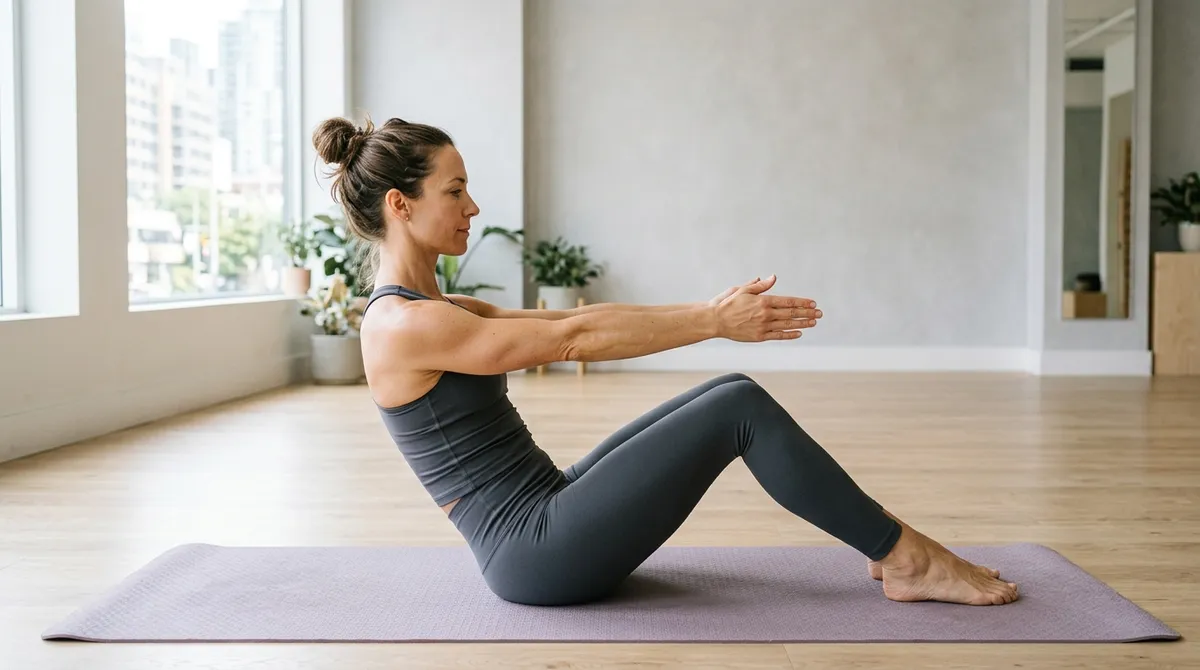
3. Seated Roll Down
How to Do It:
- Sit upright with your feet flat on the floor, knees bent, and hands resting behind your thighs.
- Inhale to lengthen your spine and sit tall.
- Exhale as you slowly roll down vertebra by vertebra, emphasizing control and engagement in your core.
- Hold at the bottom for a moment before using your core to roll back up to the starting position.
Common Mistakes to Avoid:
- Losing the curve in your spine. Keep that fun little C-shape!
- Rolling down too fast. Slow and controlled is key!
Build Your Own Deep Core Routine
Now that you’ve learned the moves, why not create your own five-minute deep core routine? Integrate these three exercises into your daily practice and focus on perfecting your form. Remember to breathe deeply and allow your body to gradually grow stronger.
Challenge Yourself
Feeling adventurous? Try a beginner-friendly deep core activation challenge! Here’s a suggestion:
- Day 1: 5 reps of Pelvic Tilts
- Day 2: 5 reps of High Plank (hold for 10-15 seconds each)
- Day 3: 5 Seated Roll Downs
- Repeat cycle for a week.
Conclusion
With these simple, yet powerful Pilates moves, you can build a deep core that serves as a foundation for all your fitness activities. Say goodbye to the misconception that abs are the only indicator of core strength, and say hello to a more functional, resilient body. Make this practice a staple in your routine, and remember to have fun while staying fit!